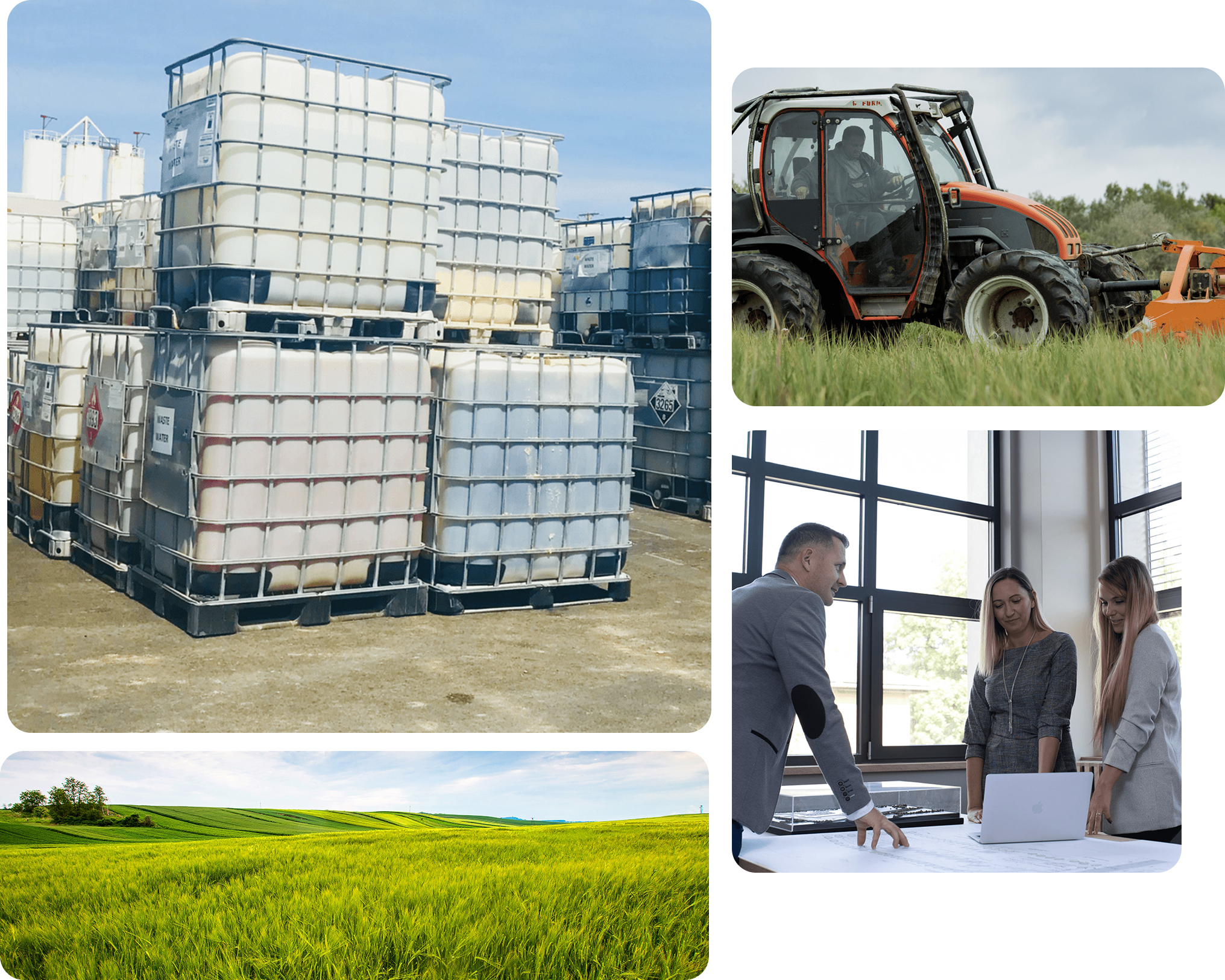

Recycling is essential from both an environmental and an economic perspective. With its help, danger turns into value, and burden becomes raw material.
Recycling in the service of sustainable industry
Waste generated during modern industrial production – whether acidic or alkaline solutions, metal sludges, or solid residues – poses serious environmental risks. The purpose of recycling is to ensure that these materials do not burden the environment but instead reappear as raw materials in the circular economy.
The essence of the process is to transform hazardous materials into valuable secondary raw materials that can re-enter industrial circulation. This is also the approach Envirotis follows: treating industrial waste as a resource from which new, industrially useful materials can be created. This is where recycling technologies come into play, turning risks into value.
Recycling with R4 technology: recovering metals
The process under the R4 code involves the recovery of metals and metal compounds. Through acidic and alkaline treatments, different heavy metals are separated, and the solutions are then purified by filtration and cementation.
The result is the production of compounds such as zinc sulfate solution, zinc oxide, or zinc sulfate monohydrate. These substances are highly sought after as raw materials in both the feed industry and the chemical industry. Recycling, therefore, does not merely mean disposing of surplus waste but producing valuable industrial products that can be utilized in multiple sectors of the economy.
Recycling with R5 technology: processing acidic solutions
The R5 recovery process focuses on treating acid waste. Here, the goal is not only neutralization but also the extraction of valuable components. The treatment of various acids (sulfuric acid, nitric acid, hydrochloric acid) yields, among others, calcium sulfate (gypsum), calcium chloride, and calcium nitrate.
These compounds have a wide range of uses: in agriculture as soil improvers, in road maintenance as de-icing agents, or at wastewater treatment plants as odor control agents. This form of recycling directly contributes to both environmental and economic objectives, as by-products are turned into valuable resources.
Recycling and its connection to the circular economy
Secondary raw materials produced from industrial waste meet the so-called end-of-waste criteria, meaning they lose their waste status and become full-fledged products. This is a key element of the circular economy, where by-products do not end up in landfills but are reintroduced into industrial cycles.
The solutions promoted by Envirotis reinforce this approach: through recycling, environmental impact is reduced while value is created for the economy. The process simultaneously supports sustainability, cost-efficiency, and resource security for the industry of the future.
In summary, waste is not an endpoint but a new opportunity. With modern technologies, every ton processed contributes to an economy that operates in a cleaner environment, with greater resource efficiency and responsibility. This approach represents one of the most important cornerstones of a circular future.